Ordering from a partner organisation
Why there is no purchase order
A purchase order makes sense with an outside supplier: you commit to quantities, they confirm, and both sides track the same document. Between our own organisations that ceremony gets in the way. The seller knows their own stock better than the buyer does, and forcing the buyer to guess what can be shipped leads to endless amended orders.
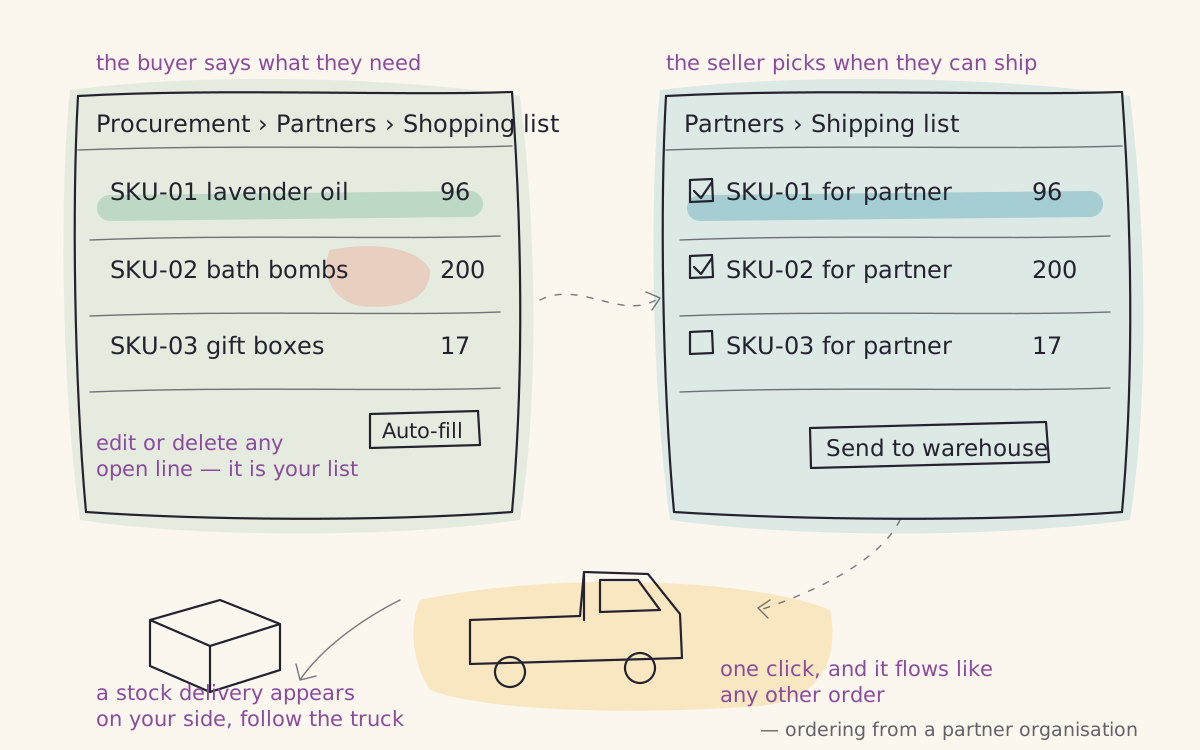
So the flow is turned around. The buyer says what they need, the seller decides what ships and when. Nobody amends anybody's order, because there is no order to amend — just a list of open needs and a stream of shipments against it.
The loop, end to end
- The buyer opens the shopping dashboard to see what is running out and how much room there is, then adds what they need to the shopping list — by hand, from the partner's catalogue, or with an auto-fill proposal.
- The seller cherry-picks lines they can ship and sends the shipment to their warehouse. It is picked, packed and dispatched like any other order.
- The moment the shipment enters the seller's warehouse, an incoming stock delivery appears on the buyer's side. It follows the seller's progress on its own — the seller is the source of truth until the goods arrive.
- When the goods physically arrive, the buyer receives, checks and places them into locations exactly like any supplier delivery.
The list is capped on purpose
The buyer's list is not a wish box. It is limited to roughly one order cycle of what the partner actually delivers to us, and new products are limited by free warehouse space and by a fair share of it per partner. A list nobody can flood is a list the seller can read: when everything is on it, nothing is urgent. Out-of-stock and A-rank items are exempt from the cap, so a genuine crisis is never queued behind the limit.
Money, invoices and problems
There are no separate supplier invoices between organisations. The seller's own invoice for the shipment is the document, and the incoming stock delivery is linked to it. If something arrives short, damaged or wrong, deal with it after you have received the delivery — that is the point where responsibility passes to your side — and any refund or credit is handled against that linked invoice.
Things worth knowing
- The first time a seller picks for a partner, a customer account named after the buying organisation is created in the seller's shop. That is expected — it is how the shipment travels through the seller's normal machinery.
- Partial picks are normal. A line picked in part leaves the remainder open for a later shipment; nothing is lost.
- Prices are the seller's current shop prices with the buying organisation's standing intercompany discount applied, shown in the buyer's own currency. Nothing is negotiated line by line; if the arrangement changes, it will be announced.