The operating system for commerce.
One codebase that runs wholesale, retail, dropshipping, marketplaces, third‑party fulfilment and your own storefronts — across many companies, warehouses, countries and currencies. Built by a team that runs it every day.
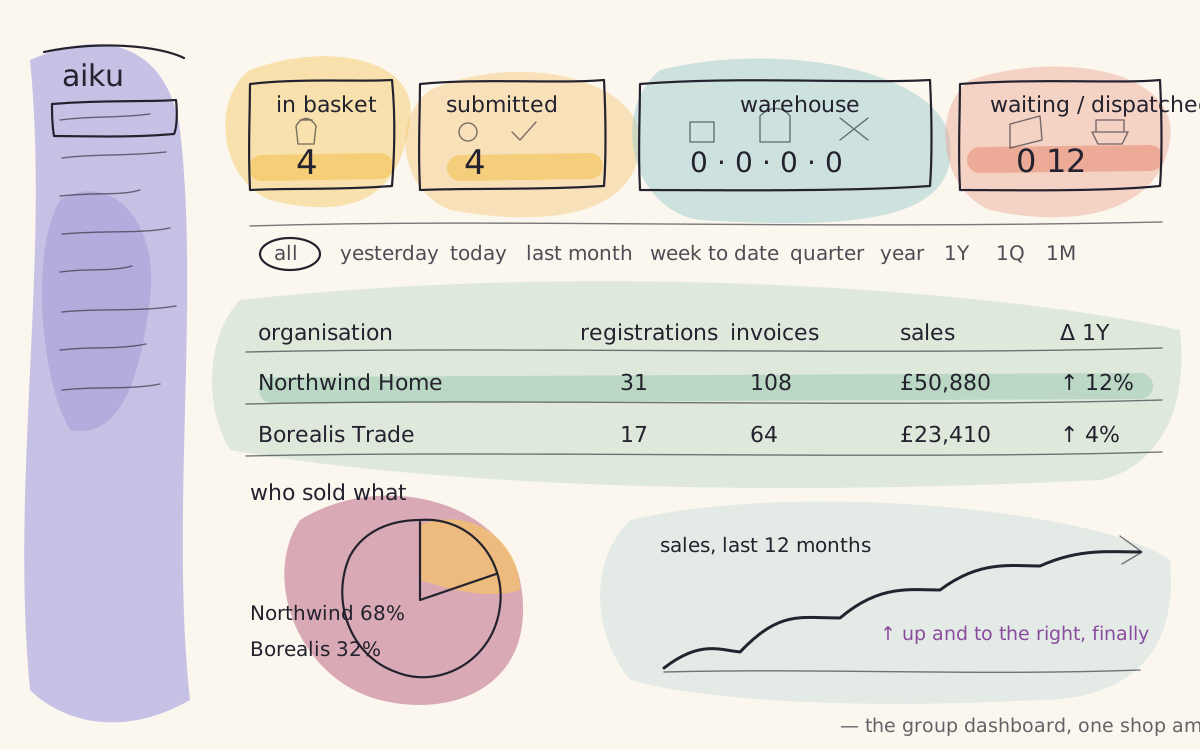
Why one system
Most trading businesses glue together an ERP, a warehouse system, a shop platform, a marketplace connector, a mailing tool and a CRM — and then spend their lives reconciling them. aiku is all of those at once, with one source of truth: a product is defined once and sold everywhere; stock moves once and every channel knows; a customer is one record whether they bought on your website, on a marketplace or through your sales team.
It is not a prototype. aiku is the production system behind a multi‑country wholesale and retail operation, and it is released as open source under the AGPL so that anyone can run it, read it, and improve it.
Wholesale first
Most of what aiku does is the unglamorous core of a trading business: trade customers with credit terms and price lists, B2B orders keyed by sales staff or placed on a trade portal, proformas, invoices and credit notes, purchase orders to suppliers, stock that is valued properly, and a warehouse that picks and packs what was sold — in several companies, currencies and countries at once.
Retail storefronts, marketplaces and dropshipping sit on top of that core and reuse it. They are real and they work; they are not the point.
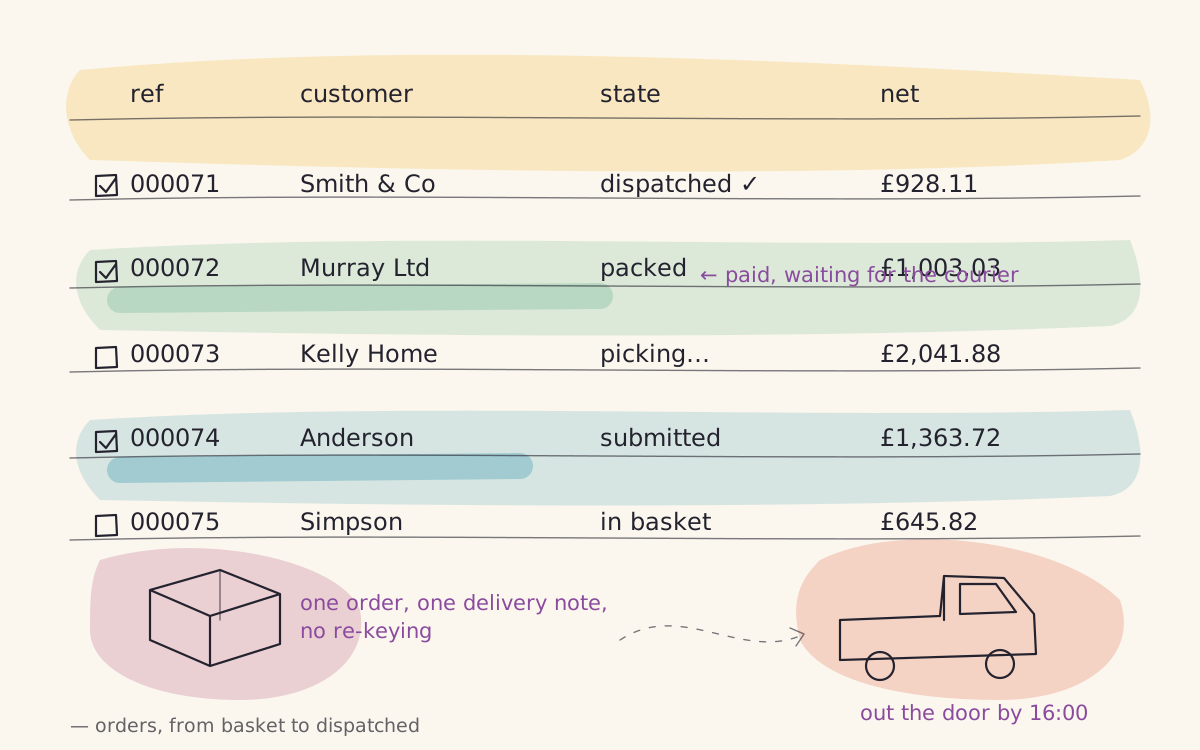
What it does
- Multi‑entityOne group, many organisations, shops, warehouses and brands. Shared masters and stock; separate pricing, tax, invoicing and websites per market.
- Masters & catalogueDefine a product once at group level — trade units, barcodes, ingredients, GPSR data — and publish it to any number of shop catalogues with their own prices and RRPs.
- Ordering & billingB2B and B2C orders, baskets, pricing rules, offers, credit, VAT, invoices, credit notes, refunds, proformas.
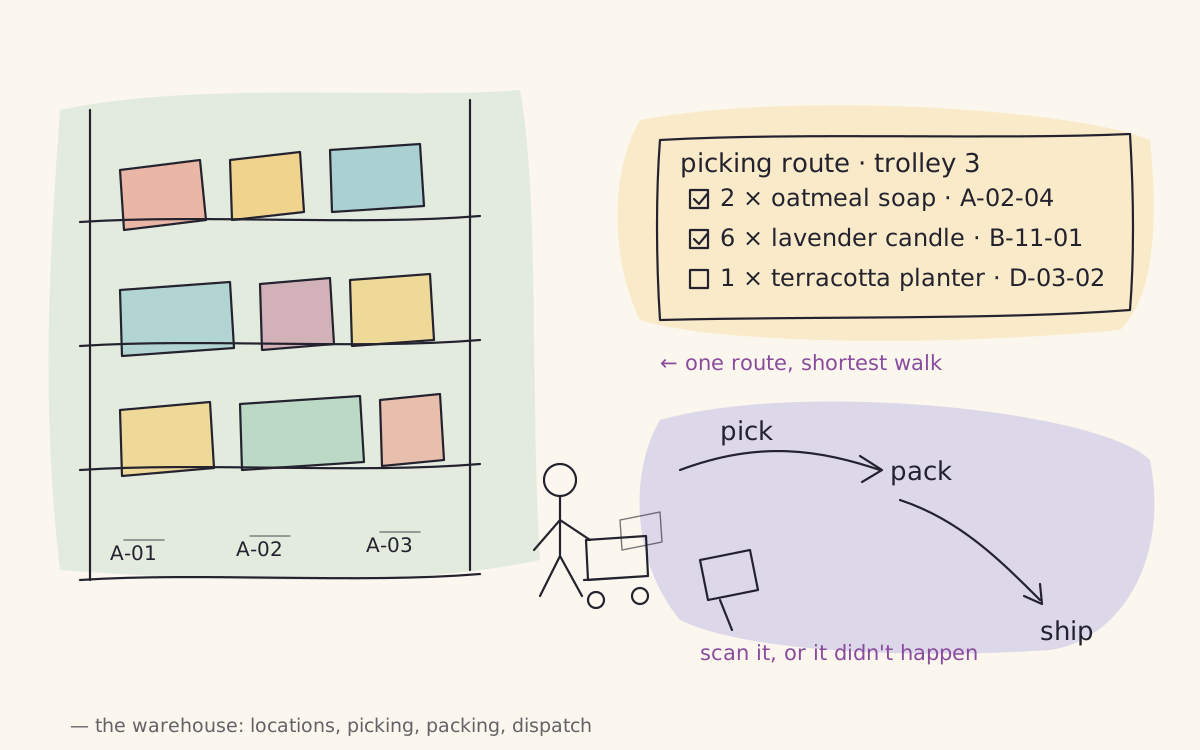
- Warehouse & dispatchLocations, stock valuation, delivery notes, picking routes and sessions, packing, boxes, trolleys, printers, a handheld app, and carrier APIs for DPD, GLS, APC, CTT, Packeta and ITD.
- ProcurementSuppliers and agents, purchase orders, stock deliveries, supplier products, landed costs.
- 3PL fulfilmentPallet storage, deliveries and returns, stored items, recurring bills and invoicing for third‑party clients, with their own portal.
- Dropshipping & marketplacesTwo‑way sync of products, orders and shipments with Shopify, WooCommerce, Magento, TikTok Shop, Amazon, eBay, Allegro and Faire.
- WebsitesA built‑in CMS and storefront engine: web blocks, banners, menus, merchandised search, SEO, GDPR pages — server‑rendered and cached.
- Customer portalSelf‑service for B2B, dropshipping and fulfilment customers: orders, invoices, pallets, channel connections, saved cards, API keys.
- CRM, marketing & commsCustomers, prospects, reviews, polls, back‑in‑stock reminders, transactional and marketing email with delivery tracking, live chat, attribution by traffic source.
- AccountingPayments and gateways, payment accounts, top‑ups, invoice categories, financial reports.
- People & productionEmployees, clocking, timesheets, leave, roles. A manufacture module for artefacts, raw materials and job orders.
- Analytics, search & AITime‑series metrics, margins, exports; group‑wide search and semantic search; a permission‑scoped MCP server so assistants can answer questions about the business safely.
And, on the side: channels
The same catalogue can also be listed on marketplaces, or sold by your own customers on their shops (dropshipping), with those orders landing in the same warehouse queue. A small part of the system; a useful one.






Under the hood
PHP 8.4 · Laravel · Octane · Horizon · Passport · Pennant · Scout · laravel/mcp
PostgreSQL + pgvector · Redis · Typesense · Meilisearch
Vue 3 · Inertia · Tailwind · Vite · TypeScript · React Native
Pest · Playwright
Around six thousand actions, one per thing the business can do; hydrators that keep every count and total honest at the point of change; time‑series tables for every dimension anyone has ever asked a question about.
On AI
We believe AI is a tool to empower human ingenuity, not to replace it. aiku ships a permission‑scoped MCP server so assistants can answer questions about the business; the decisions stay with people. How we drew that line →
Engineering notes
How parts of aiku came to be the way they are. All notes →
-
Sending a thousand products is like sending none
A dashboard that makes ordering easy invites dumping. What stops the purchaser ticking everything red and calling it someone else's problem - a hard cap built from measured deliveries, a shared warehouse split fairly, and a rule about never letting anyone edit the number that judges them.
-
Stop pretending you can forecast. You're lucky if your data can predict the past.
Data can only predict the past. Our stock forecaster leans into that - measure the past honestly (including the days the shelf was empty), then say how wrong you might be.
-
Seventeen kinds of PDF, two renderers
Almost every piece of paper the business touches is a PDF we generated — invoices, delivery notes, picking sheets, pallet returns, timesheets, barcode labels in five widths, carrier labels from three APIs. How one rule decides between mpdf and headless Chrome, how a single invoice template serves shops in different countries, languages and tax regimes without forking, and the gotchas: a bakery called "& Fils" that broke shipping, labels that must scale from 55 mm to 125 mm, and why we merge PDFs with a renderer that never renders them.